Reactive by Default: The Hidden Cost of Auditing Compliance Only When Something Goes Wrong
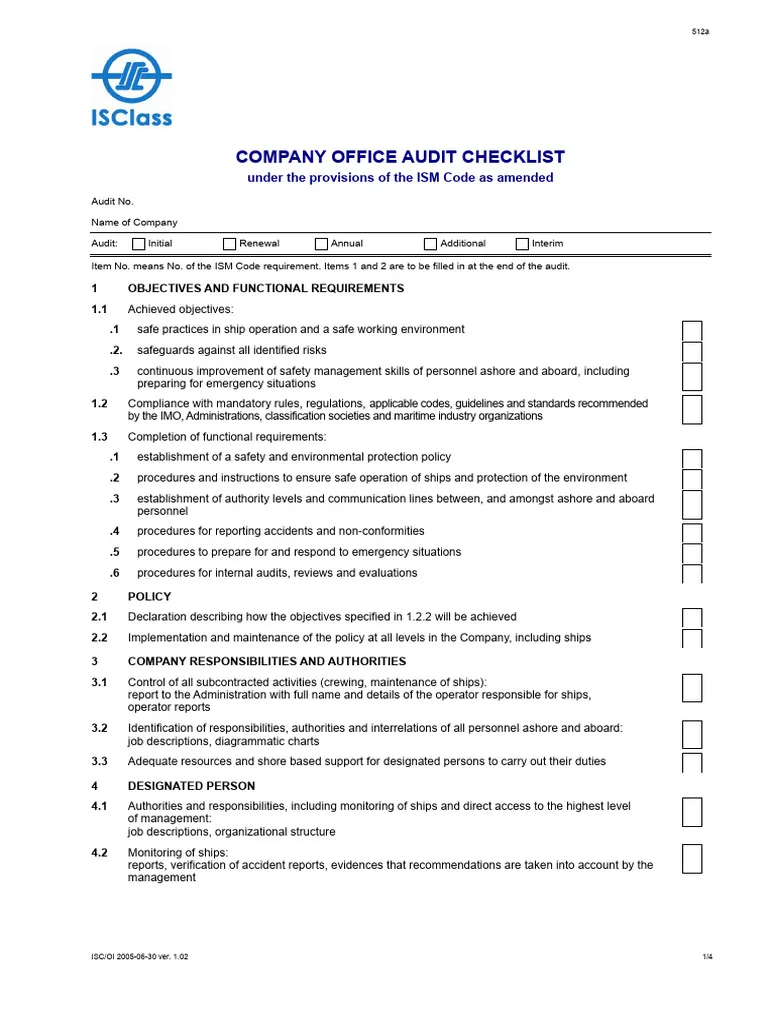
Photo: business audit checklist clipboard UK office professional, via imgv2-2-f.scribdassets.com
There is a particular kind of clarity that arrives only under pressure. A regulatory visit is announced with minimal notice. A serious workplace incident triggers an investigation. A former employee submits a tribunal claim. In each scenario, the business in question is suddenly required to demonstrate — comprehensively and credibly — that its compliance framework is sound. For a great many UK organisations, that moment is the first time anyone has looked closely enough to find out.
This is not a pattern confined to small or inexperienced businesses. It appears across sectors, across headcounts, and across organisational maturity levels. The structural absence of scheduled, systematic compliance auditing is one of the most widespread and least-discussed vulnerabilities in UK commercial life.
Why Proactive Auditing Gets Postponed
The reasons organisations defer internal compliance reviews are rarely negligent in origin. They are, in most cases, entirely understandable — which is precisely what makes them so persistent.
Compliance auditing requires time that operational teams do not readily have. It requires expertise that may not sit within the business. It surfaces findings that then demand resource to address. For a leadership team already navigating trading pressures, staffing challenges, and commercial priorities, the audit that reveals no immediate problem can feel like a task that justifies indefinite postponement.
There is also a subtler psychological dynamic at work. Businesses that have not experienced regulatory enforcement tend to interpret that absence as confirmation that their compliance posture is adequate. Years of uninterrupted trading without incident create a form of institutional confidence that is rarely tested — and therefore rarely questioned. The logic runs: if something were seriously wrong, we would know about it. This assumption is rarely examined until it is disproven.
Finally, many UK businesses lack a clear owner for the audit process itself. Compliance responsibilities are frequently distributed across HR, operations, finance, and line management without any single function holding accountability for a periodic, comprehensive review. Without ownership, scheduling does not happen.
What Reactive Discovery Actually Costs
When compliance gaps are identified under crisis conditions, the consequences are compounded in ways that proactive discovery would not produce.
The most direct cost is financial. Regulatory fines, civil claims, and legal fees associated with enforcement proceedings are substantially higher than the cost of a structured internal audit programme. The Health and Safety Executive, the Information Commissioner's Office, the Financial Conduct Authority, and a range of sector-specific regulators in the UK all impose penalties that escalate when investigations reveal systemic rather than isolated failures. A business that discovers a documentation gap during a quiet internal review can address it quietly. A business that has the same gap exposed during an enforcement investigation faces a materially different outcome.
Beyond the direct financial impact, reactive discovery creates operational disruption that proactive review avoids. Staff are diverted from their primary responsibilities to support investigations. Management attention is consumed by crisis response rather than strategy. External advisers are engaged at short notice and at premium rates. The business, in effect, pays twice: once for the original failure, and again for the conditions under which it was uncovered.
There is also a reputational dimension. Regulatory findings are frequently public. Employment tribunal decisions are published. In a business environment where clients, partners, and prospective employees increasingly scrutinise compliance records, the visibility of enforcement action carries consequences that extend well beyond the immediate penalty.
The Structural Case for Scheduled Review
Establishing a routine compliance audit cycle is not a complex undertaking. It does, however, require a deliberate decision to treat it as a standing business activity rather than a discretionary project.
The first requirement is ownership. A named individual — whether an internal compliance lead, a senior operational manager, or an external consultant — must hold responsibility for ensuring that reviews are scheduled, conducted, and acted upon. Without a named owner, the process will consistently yield to competing priorities.
The second requirement is scope definition. A compliance audit need not attempt to examine everything simultaneously. A structured programme might rotate across key risk areas — health and safety, data protection, employment law compliance, sector-specific obligations — on a rolling annual or biannual basis. This approach makes the process manageable without leaving any significant area unexamined over time.
The third requirement is documentation. The value of an audit is not solely in what it finds. It is also in the evidence it creates that the organisation has engaged in good-faith, systematic review. Regulatory bodies and employment tribunals consistently take a more favourable view of businesses that can demonstrate a history of proactive compliance management, even where individual failures are identified.
Turning the Audit into a Business Asset
Organisations that have embedded routine compliance review frequently report that the process yields value beyond its primary risk management function. Audits surface operational inefficiencies. They identify training needs before those needs become incidents. They reveal procedural drift — the gradual divergence between documented process and actual practice — before it reaches a scale that creates genuine exposure.
In this sense, the compliance audit is not simply a defensive mechanism. It is an intelligence tool. The business that audits regularly knows more about its own operations than the business that does not. That knowledge has commercial as well as regulatory value.
The organisations most vulnerable to regulatory enforcement in the UK are not, in the main, those that have made deliberate choices to operate outside the rules. They are those that have allowed their compliance position to become opaque through the simple accumulation of unexamined time. The remedy is not sophisticated. It is scheduled, systematic, and owned.
At Coleman's CTTS, we work with UK businesses to design compliance review frameworks that fit their operational context — establishing the review cycles, documentation standards, and ownership structures that convert reactive vulnerability into proactive resilience. The audit no one schedules is always the most expensive one.