Training Neglect Hotspots: Five UK Sectors Where Compliance Education Gaps Create Predictable Disasters
The Pattern of Predictable Failure
Regulatory enforcement data reveals a troubling pattern across UK business sectors: certain industries consistently appear in violation statistics, not due to complex regulatory ambiguity, but because of systematic underinvestment in compliance training. These sectors share common characteristics—tight margins, operational urgency, and cultures that prioritise immediate delivery over procedural rigour.
The consequences follow predictable trajectories. Initial violations receive warnings. Repeat offences trigger escalated enforcement. Serious breaches result in prosecution, substantial fines, and reputational damage that often exceeds the cost of comprehensive training programmes by orders of magnitude.
Social Care: The Vulnerability Amplifier
The social care sector presents perhaps the most concerning training deficits, where inadequate compliance education directly impacts vulnerable individuals. Chronic underfunding creates pressure to minimise training investment, yet regulatory requirements have expanded significantly.
Common training gaps include:
- Safeguarding procedure updates and scenario-based application
- Data protection requirements for sensitive personal information
- Medication administration protocols and documentation standards
- Emergency response procedures and multi-agency coordination
Recent enforcement actions demonstrate the consequences. Care Quality Commission interventions frequently cite training deficiencies as contributing factors in serious incidents. The sector's high staff turnover exacerbates these challenges, as inadequate induction programmes fail to establish competency before individuals assume critical responsibilities.
Minimum viable training for social care providers must include monthly competency assessments, scenario-based learning, and documented supervision structures that verify theoretical knowledge translates into practical application.
Logistics: Speed Versus Safety
Logistics operations face intense pressure to prioritise throughput over procedural compliance, creating systematic training neglect. The sector's reliance on temporary and agency workers compounds these challenges, as traditional training programmes struggle to accommodate rapid workforce changes.
Critical training deficiencies include:
- Health and safety procedures for manual handling and equipment operation
- Dangerous goods regulations and documentation requirements
- Driver hours compliance and digital tachograph operation
- Workplace transport safety and pedestrian management
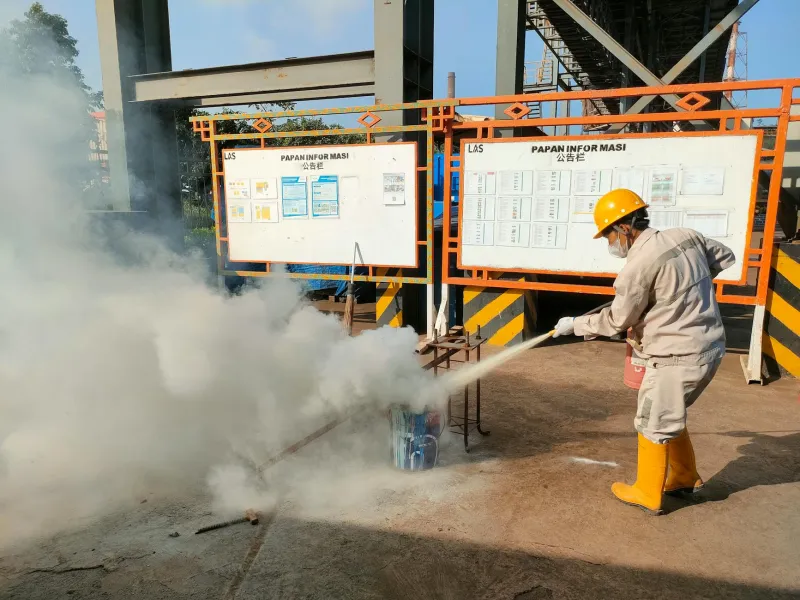
Enforcement patterns show predictable clusters around peak trading periods when operational pressure intensifies. Health and Safety Executive interventions often identify inadequate training as contributing factors in workplace accidents, whilst DVSA enforcement actions frequently cite driver training deficiencies.
 Photo: Health and Safety Executive, via safetyrac.co.uk
Effective logistics training requires modular approaches that accommodate shift patterns and rapid deployment cycles. Competency verification must occur before operational deployment, not during probationary periods when mistakes carry full consequences.
Hospitality: The Compliance Afterthought
Hospitality businesses often treat compliance training as an afterthought, focusing resources on customer service and operational efficiency. This sector's seasonal workforce patterns and high turnover rates create additional challenges for maintaining consistent training standards.
Systematic training gaps include:
- Food safety and hygiene procedures beyond basic certification
- Alcohol licensing responsibilities and age verification protocols
- Fire safety and emergency evacuation procedures
- Data protection requirements for customer information handling
Local authority enforcement actions consistently identify training deficiencies during routine inspections. Environmental health interventions often reveal gaps between basic food hygiene certificates and practical application of safety procedures.
Hospitality training programmes must accommodate rapid workforce changes whilst ensuring consistent competency standards. Verification systems should monitor practical application, not just certificate acquisition.
Construction: The Experience Assumption
Construction sector training failures often stem from dangerous assumptions about experience equivalence. The industry's project-based structure and subcontractor relationships create complex training responsibilities that many organisations fail to manage effectively.
Persistent training deficiencies include:
- Site-specific safety inductions and hazard identification
- Equipment operation certification and maintenance requirements
- Working at height procedures and fall protection systems
- Confined space entry protocols and emergency procedures
Health and Safety Executive statistics show construction maintains disproportionate accident rates despite extensive regulatory attention. Investigation reports frequently identify inadequate training as contributing factors, particularly for workers transitioning between different project types or working environments.
Construction training must address both general competencies and site-specific requirements. Principal contractors require robust systems for verifying subcontractor training standards before work commencement.
Manufacturing: Technology Outpacing Training
Manufacturing environments face unique challenges as technological advancement outpaces training programme development. Traditional apprenticeship models struggle to accommodate rapid changes in equipment, processes, and regulatory requirements.
Critical training gaps include:
- New equipment operation procedures and safety protocols
- Environmental compliance and waste management requirements
- Quality control procedures and documentation standards
- Emergency shutdown procedures and incident response protocols
Regulatory enforcement often identifies disconnects between equipment capabilities and operator competency. Environmental Agency interventions frequently cite training deficiencies in pollution prevention and waste management procedures.
 Photo: Environmental Agency, via fpsenvironmental.co.uk
Manufacturing training programmes require continuous updating to reflect technological changes. Competency verification must demonstrate practical application under normal and emergency conditions.
The Competitive Advantage of Proactive Investment
Sectors that break these patterns discover significant competitive advantages. Organisations investing proactively in compliance training experience:
- Reduced regulatory intervention frequencies
- Lower insurance premiums and improved risk profiles
- Enhanced operational efficiency through consistent procedures
- Improved employee retention and workplace culture
- Stronger customer confidence and market positioning
Breaking the Neglect Cycle
Addressing systematic training neglect requires recognition that compliance education represents strategic investment, not operational overhead. Successful organisations integrate training requirements into business planning, ensuring adequate resource allocation and delivery mechanisms.
The choice facing these sectors is stark: continue accepting predictable regulatory failures as business costs, or invest in comprehensive training programmes that eliminate systematic vulnerabilities whilst creating competitive differentiation.
The enforcement data provides clear evidence—training neglect creates predictable disasters. The question is whether your organisation will learn from others' failures or contribute to these statistical patterns.