Accountability Without Authority: How UK Principal Contractors Face Legal Liability for Subcontractor Training Failures

The Hidden Liability Threatening UK Construction
Across construction sites throughout the UK, a dangerous assumption persists: that subcontractors arrive fully trained and compliant with current regulations. This misconception has created a significant legal exposure for principal contractors who, under current regulatory frameworks, bear responsibility for health and safety outcomes regardless of their direct employment relationships with the workers on their sites.
The Construction (Design and Management) Regulations 2015 establish clear duties for principal contractors that extend far beyond their immediate workforce. Section 15 explicitly requires principal contractors to ensure that all workers—including those employed by subcontractors—are provided with appropriate health and safety information and training. This creates a compliance paradox where accountability exists without corresponding authority.
Regulatory Reality Check: Where Duty Meets Difficulty
The Health and Safety at Work Act 1974 compounds this challenge through its broad interpretation of employer duties. Section 3 establishes that employers must ensure the health and safety of persons not in their employment who may be affected by their undertaking. For principal contractors, this translates into legal responsibility for subcontractor actions, even when direct oversight is contractually limited.
Recent enforcement action by the Health and Safety Executive illustrates the practical implications of this regulatory framework. In 2023, several principal contractors faced prosecution not for their own safety failures, but for incidents involving inadequately trained subcontractor personnel. The courts consistently held that delegation of work does not constitute delegation of legal responsibility.
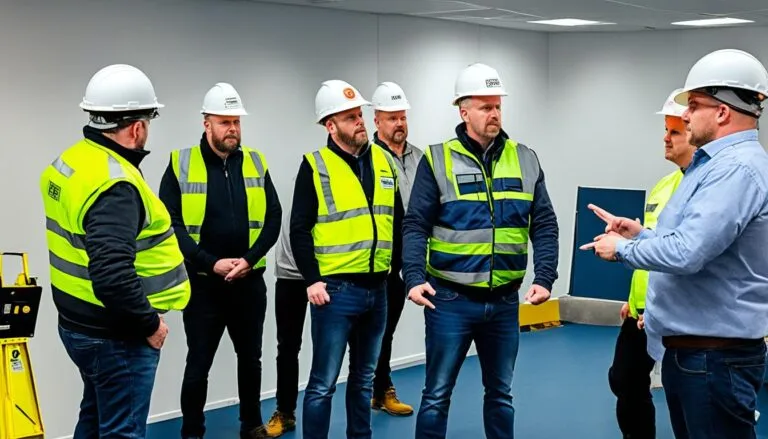 Photo: Health and Safety Executive, via labourlaws.co.uk
This regulatory landscape creates particular challenges for UK businesses operating in sectors where subcontracting is endemic. Beyond construction, industries including facilities management, manufacturing, and logistics face similar exposure where complex supply chains create multiple layers of employment relationships.
The False Security of Contractual Protection
Many principal contractors attempt to address this exposure through contractual terms requiring subcontractors to maintain appropriate training and compliance standards. However, contractual protection provides limited defence against regulatory enforcement. The HSE's position remains clear: principal contractors cannot contract out of their statutory duties.
Moreover, contractual terms often lack the specificity needed to ensure meaningful compliance. Generic requirements for "appropriate training" fail to address the detailed competency standards required across different trades and evolving regulatory requirements. This vagueness creates a compliance gap that leaves both parties exposed.
The practical challenge extends beyond contract drafting to verification and monitoring. Principal contractors frequently lack the technical expertise to assess subcontractor training adequacy across multiple specialisms. This knowledge gap undermines their ability to make informed decisions about worker competency.
Building Practical Accountability Frameworks
Effective management of subcontractor compliance requires structured approaches that balance legal protection with operational practicality. Successful principal contractors implement multi-layered verification systems that extend beyond initial contractor selection to ongoing monitoring and support.
Pre-qualification processes must move beyond basic insurance and registration checks to include detailed competency verification. This involves reviewing individual worker certifications, training records, and experience documentation. However, verification alone proves insufficient without ongoing monitoring mechanisms.
Establishing clear competency standards for each trade and activity provides the foundation for meaningful oversight. These standards should reference specific qualifications, training requirements, and experience thresholds aligned with current regulations and industry best practice. Regular updates ensure standards reflect evolving regulatory requirements.
Implementation Strategies for UK Businesses
Practical implementation begins with comprehensive contractor databases that track individual worker qualifications and certification expiry dates. Digital platforms increasingly support this requirement, providing automated alerts for approaching renewal deadlines and maintaining audit trails for compliance demonstration.
Regular site inspections must include competency verification alongside traditional safety checks. This involves reviewing worker certification cards, conducting spot checks on technical knowledge, and observing work practices against established standards. Documentation of these activities provides crucial evidence of due diligence.
Training provision represents another critical element. Rather than relying solely on subcontractor training programmes, many principal contractors now provide supplementary training covering site-specific requirements and emerging regulatory changes. This approach ensures consistent standards whilst demonstrating proactive compliance management.
Technology Solutions and Digital Oversight
Modern compliance management increasingly relies on digital solutions that provide real-time visibility of subcontractor competency status. Cloud-based platforms enable principal contractors to maintain comprehensive records whilst providing subcontractors with tools to manage their own compliance obligations.
Mobile applications support on-site verification through QR code scanning and digital certification checking. These tools reduce administrative burden whilst providing immediate access to worker competency information. Integration with existing project management systems ensures compliance checking becomes embedded in normal work processes.
Data analytics capabilities enable predictive compliance management, identifying patterns that indicate potential future failures. This proactive approach allows principal contractors to address compliance gaps before they create operational or legal exposure.
Moving Forward: Strategic Compliance Investment
The regulatory environment surrounding subcontractor compliance continues to evolve, with increasing emphasis on demonstrable due diligence and proactive management. Principal contractors who treat compliance as a strategic capability rather than an administrative burden will be best positioned to manage this challenging landscape.
Investment in comprehensive compliance systems delivers benefits beyond risk mitigation. Improved contractor management enhances project quality, reduces delays, and strengthens supply chain relationships. These operational benefits often justify compliance investments independent of regulatory requirements.
The subcontractor compliance paradox represents a fundamental challenge for UK businesses operating in complex supply chain environments. However, structured approaches to verification, monitoring, and support can effectively manage this exposure whilst maintaining operational flexibility.