Once a Year Is Not Enough: The Fundamental Flaw in How UK Businesses Approach Compliance Training

Let us be direct about something that the UK compliance training industry has been reluctant to say clearly: the annual refresh model is broken. Not slightly imperfect, not in need of minor adjustment — fundamentally, structurally broken. And the businesses that continue to rely upon it are not managing compliance risk. They are managing the appearance of compliance risk management, which is an entirely different thing.
This is not a comfortable position to articulate. Annual compliance training is deeply embedded in how UK businesses think about their regulatory obligations. It appears in HR policies, in tender documentation, in board reporting, and in the mental frameworks of managers who genuinely believe they are doing the right thing. The problem is that the world their workforce operates in changes continuously, whilst their training model does not.
The Calendar Assumption and Why It Fails
The annual training model rests on an implicit assumption: that the compliance knowledge delivered in January (or whenever the financial year dictates) remains sufficiently current, sufficiently retained, and sufficiently applicable to see a workforce through to the following January. This assumption is incorrect on all three counts.
Regulatory environments do not observe twelve-month cycles. Guidance updates, legislative amendments, new enforcement priorities, and revised codes of practice emerge throughout the year — sometimes in direct response to incidents that have occurred in the sector. A workforce trained in January on a set of requirements that were subsequently updated in April is, from May onwards, operating with incomplete or potentially incorrect knowledge. The annual training model has no mechanism for addressing this.
Workforces do not remain static between training events. In sectors with meaningful staff turnover — hospitality, logistics, retail, construction, healthcare — a significant proportion of the people present at an annual training session may not be employed by the organisation twelve months later. Their replacements, hired throughout the year, may receive induction training of varying quality, but they will not receive the substantive compliance education delivered at the annual event until the following cycle arrives. In some cases, that means waiting close to a year.
What the Research Consistently Demonstrates
The cognitive science here is not ambiguous. The forgetting curve, first documented by Hermann Ebbinghaus in the nineteenth century and extensively validated by subsequent research, demonstrates that without reinforcement, individuals forget a substantial proportion of newly acquired information within days of receiving it. By the time an annual training refresh arrives, the knowledge delivered at the previous session has, for most participants, largely faded.
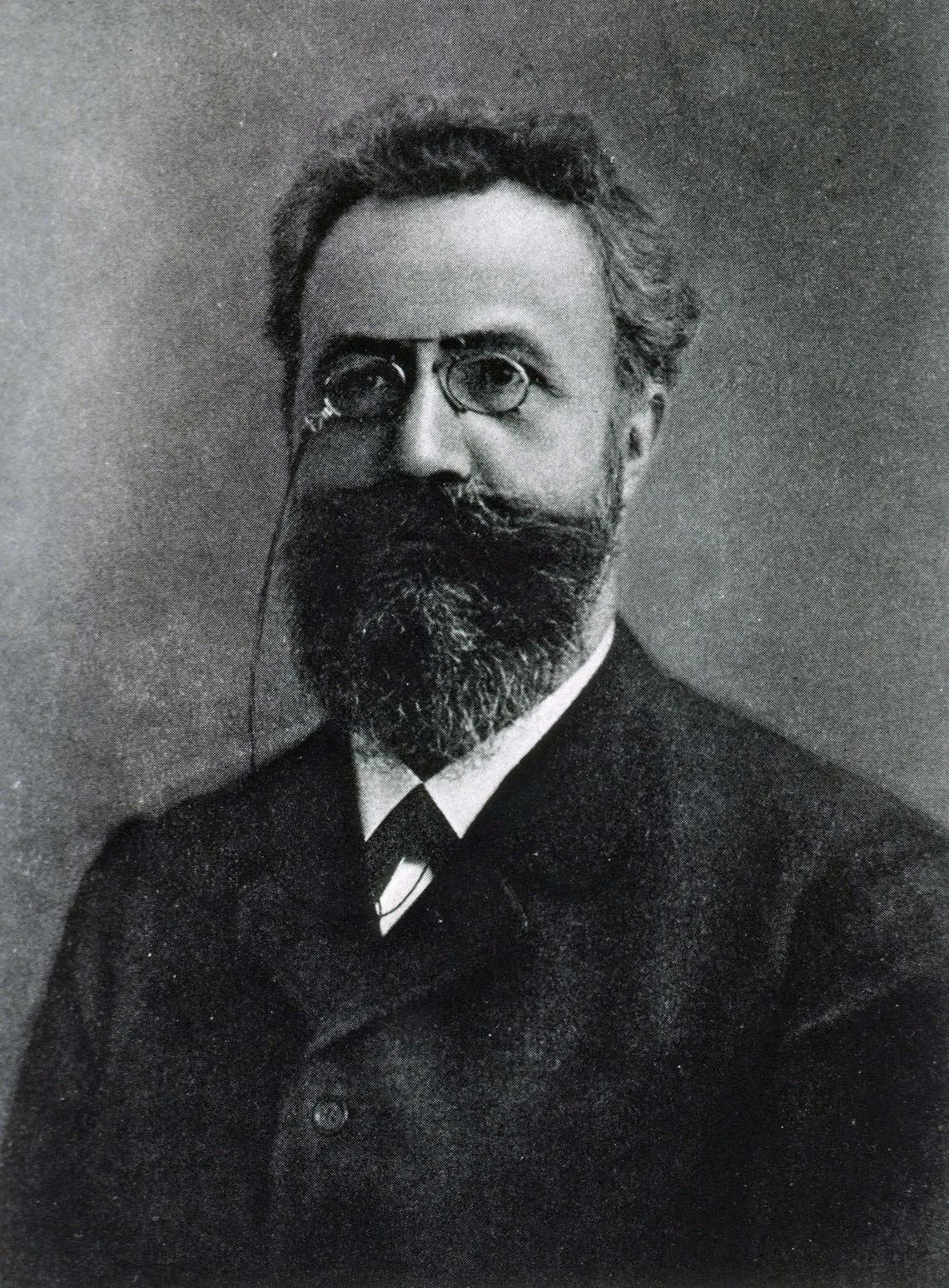 Photo: Hermann Ebbinghaus, via cdn.britannica.com
This does not mean that training is ineffective. It means that point-in-time training events, delivered in isolation without reinforcement, are far less effective than the organisations commissioning them believe. The compliance training that appears on an employee's record as "completed" may represent a genuine capability or a faded memory, and the annual model provides no reliable mechanism for distinguishing between the two.
The Operational Change Problem
Beyond workforce turnover and regulatory updates, there is a third dimension that the annual model consistently fails to address: operational change. UK businesses do not stand still. They adopt new technologies, enter new markets, take on new clients, restructure their supply chains, and modify their processes. Each of these changes has the potential to introduce new compliance obligations or to alter the context in which existing obligations apply.
A logistics operation that introduces a new fleet management system, a manufacturer that begins working with a new category of chemical, a professional services firm that takes on a client in a regulated sector — all of these developments carry compliance implications that may not be addressed until the next scheduled training event arrives. In the interim, staff are making decisions and taking actions without the knowledge they need.
This is the gap in which regulatory exposure lives. It is not always dramatic. It rarely announces itself. But it is real, and it is the gap that enforcement investigations consistently identify.
The Audit Trail Illusion
One of the most seductive features of the annual model is the clean audit trail it produces. Training completed, certificates issued, records filed. When an external auditor or regulatory inspector asks for evidence of training, there is something to show them. This creates a powerful but misleading sense of security.
The existence of a training record is not the same as the existence of a competent, compliant workforce. Regulators and courts are increasingly sophisticated in their ability to probe beneath the surface of documentation. The question they are asking is not "did your employees attend a training session?" but "did your employees have the knowledge and capability required to perform their roles compliantly?" These are different questions, and the annual model is better at answering the first than the second.
What a More Effective Model Looks Like
Replacing the annual model does not require abandoning structured training events. It requires supplementing them with an architecture of continuous reinforcement, responsive updating, and genuine competency verification.
Short-interval knowledge checks — delivered digitally and taking no more than a few minutes — can reinforce key concepts at regular intervals, addressing the forgetting curve without placing unreasonable demands on staff time. Triggered training protocols, activated by operational changes, regulatory updates, or incident reports, ensure that the workforce receives relevant knowledge when it is needed rather than when the calendar dictates. Role-specific competency assessments provide a more reliable indicator of actual capability than attendance records alone.
Critically, this model requires organisations to treat compliance training as an ongoing operational function rather than an annual administrative event. That is a cultural shift as much as a structural one, and it begins with senior leadership recognising that the annual refresh, however well-intentioned, is not sufficient protection against the regulatory environment UK businesses now face.
The Strategic Imperative
For UK business leaders, the case for moving beyond the annual model is not merely ethical — it is strategic. Organisations that can demonstrate continuous, responsive, and genuinely effective compliance training are better positioned in tenders, better protected in enforcement investigations, and better equipped to sustain the operational standards that underpin long-term commercial performance.
At Coleman's CTTS, our compliance training solutions are built on the recognition that regulatory obligations do not pause between January and December. Neither should the systems designed to meet them.