Time Served, Skills Unverified: The Dangerous UK Workplace Assumption Exposing Businesses to Critical Safety Failures

The Tenure Trap: When Experience Becomes Assumption
In boardrooms and workshops across the United Kingdom, a dangerous narrative persists: that years of service automatically translate into proven competence. This cultural assumption has become so embedded in UK workplace practices that formal skill verification often takes a backseat to tenure-based decision making. The consequences of this mindset extend far beyond operational inefficiency, creating genuine safety risks and legal exposure that many organisations fail to recognise until crisis strikes.
 Photo: United Kingdom, via www.nationsonline.org
The problem manifests most acutely in safety-critical industries where the stakes of incompetence prove catastrophic. Yet even in seemingly low-risk environments, the cumulative effect of unverified competence creates operational vulnerabilities that undermine business resilience and regulatory compliance.
This cultural tendency reflects broader UK workplace traditions that value loyalty and experience over formal qualification. However, modern regulatory frameworks increasingly demand demonstrable competence rather than assumed capability, creating a fundamental disconnect between traditional practices and contemporary requirements.
Cultural Foundations of Competency Assumptions
The British workplace culture historically emphasised apprenticeship models where skills developed through observation and gradual responsibility increase. This approach created genuine expertise in stable industries with consistent practices and technologies. However, the pace of regulatory change and technological advancement has outstripped traditional learning models.
Many UK businesses continue operating under assumptions formed during periods of regulatory stability. Senior managers who developed expertise through experience-based learning often struggle to recognise that current regulatory environments require formal verification processes that didn't exist during their own career development.
This generational divide creates particular challenges in industries undergoing rapid transformation. Experienced workers may possess valuable practical knowledge whilst lacking awareness of current compliance requirements. Conversely, newly trained personnel understand current regulations but lack the practical wisdom that comes from extensive experience.
The Verification Bypass: How Assumptions Override Assessment
Formal competency verification processes exist across most UK industries, yet they frequently become secondary considerations when promoting or deploying experienced personnel. Human resources departments routinely approve role changes based on tenure and general performance rather than specific skill verification.
This bypass typically occurs through informal conversations where managers assume that long-serving employees "obviously" possess required capabilities. The assumption proves so strong that formal assessment seems unnecessary or even insulting to experienced workers.
Operational pressure compounds this tendency. When urgent project needs arise, managers default to deploying available experienced personnel rather than conducting time-consuming competency verification. This short-term thinking creates long-term exposure as unverified workers assume safety-critical responsibilities.
The problem extends beyond individual deployment decisions to systematic organisational practices. Many UK businesses lack structured revalidation programmes that would identify skill degradation or knowledge gaps in long-serving personnel.
Case Study: Manufacturing Sector Exposure
The UK manufacturing sector provides stark illustrations of how tenure-based assumptions create genuine safety risks. A recent HSE investigation into a serious machinery incident revealed that the operator possessed fifteen years of experience but had never received formal training on updated safety protocols introduced five years earlier.
The incident occurred because management assumed that an experienced operator would naturally understand new safety requirements. No formal briefing or competency check was conducted when new equipment was installed. The operator's extensive experience actually worked against safety, as established habits conflicted with updated procedures.
This pattern repeats across UK manufacturing facilities where experienced workers operate under outdated practices whilst newer safety requirements remain unaddressed. The regulatory framework assumes formal training and verification, whilst workplace culture relies on experience and assumption.
Similar exposures exist in the construction industry, where experienced tradespeople often work alongside new safety requirements without formal retraining. The assumption that "good workers adapt naturally" proves particularly dangerous when new requirements conflict with established practices.
Regulatory Reality: When Assumptions Meet Enforcement
UK regulatory frameworks increasingly emphasise demonstrable competence over assumed capability. The Health and Safety at Work Act requires employers to ensure worker competence through training and instruction. This legal obligation cannot be satisfied through assumptions about experience-based knowledge.
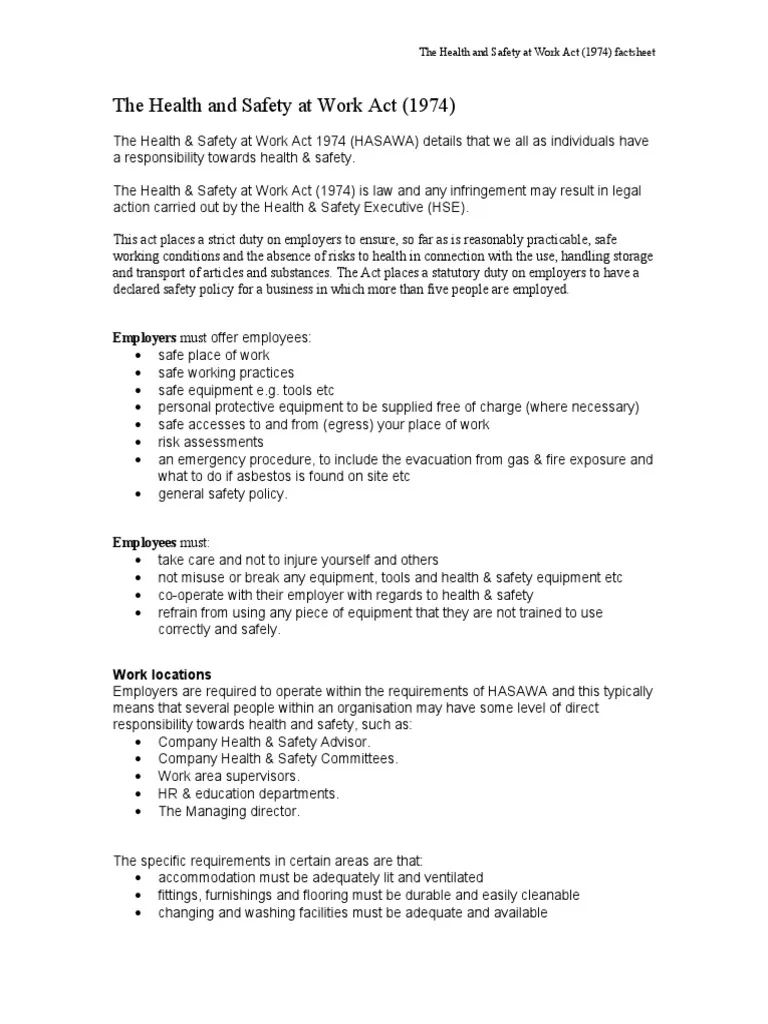 Photo: Health and Safety at Work Act, via imgv2-2-f.scribdassets.com
Recent enforcement action demonstrates regulatory authorities' focus on formal verification rather than tenure-based assumptions. Businesses face prosecution not because workers lacked experience, but because employers failed to verify current competence through appropriate assessment methods.
The legal standard requires "suitable and sufficient" training that addresses specific role requirements and current regulatory obligations. Experience alone cannot satisfy this standard, particularly where regulations have evolved since workers initially acquired their skills.
Insurance implications compound regulatory exposure. Many professional indemnity and public liability policies require evidence of appropriate training and competency verification. Claims may be rejected where businesses cannot demonstrate formal assessment processes.
Building Verification Culture: Beyond Tenure Assumptions
Effective competency management requires cultural change that values verification alongside experience. This involves creating systems where formal assessment becomes routine rather than exceptional, reducing the perceived stigma of competency checking for experienced personnel.
Successful organisations implement regular revalidation programmes that treat all workers equally regardless of tenure. These programmes focus on current requirements rather than historical achievement, ensuring that experience remains relevant to contemporary practices.
Transparency proves crucial in gaining worker acceptance of verification programmes. When businesses clearly communicate the regulatory requirements driving competency checking, experienced workers typically understand the necessity rather than viewing assessment as personal criticism.
Mentoring programmes can bridge the gap between experience and formal verification. Experienced workers become competency assessors for newer personnel, whilst simultaneously updating their own knowledge through assessor training programmes.
Practical Implementation Strategies
Implementation begins with comprehensive skills audits that identify current capabilities against formal requirements. These audits must cover all workers regardless of tenure, creating baseline understanding of organisational competency gaps.
Structured revalidation schedules ensure that competency checking becomes predictable and routine. Rather than ad-hoc assessment triggered by incidents or audits, regular cycles create ongoing verification that maintains current standards.
Technology platforms increasingly support competency management through digital records and automated renewal alerts. These systems reduce administrative burden whilst providing audit trails that demonstrate systematic approach to verification.
Training programmes must address both technical competence and assessment skills. Organisations need personnel capable of conducting meaningful competency evaluation rather than tick-box exercises that satisfy bureaucratic requirements without ensuring genuine capability.
The Business Case for Formal Verification
Beyond regulatory compliance, formal competency verification delivers operational benefits that justify implementation costs. Structured assessment identifies training needs before they create operational problems, reducing the cost of reactive capability development.
Worker confidence increases when competency is formally recognised rather than assumed. Verified workers demonstrate greater willingness to raise concerns and seek support when facing unfamiliar situations.
Customer confidence strengthens when businesses can demonstrate systematic competency management. Formal verification provides evidence of capability that supports commercial relationships and tender responses.
The cultural shift from assumption to verification represents a fundamental evolution in UK workplace practices. Organisations that embrace this change position themselves for success in increasingly regulated business environments where demonstrable competence becomes a competitive advantage rather than administrative burden.